Tick Facts and Information
What is a Tick?
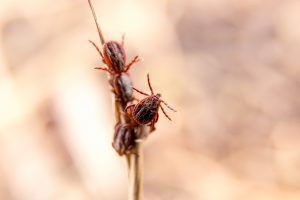
Ticks on a Stick!
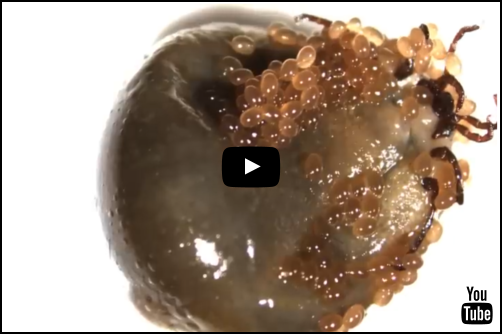
Ticks are small, bloodsucking Arachnids, Arthropods, or part of the Spider family. Ticks life cycle (about 3 years) consists of three stages once they are born with 2-3000 other eggs. The first stage is the larva where their first blood meal is normally a white footed mouse (see below video) which is where they become infected with lyme and other diseases. That fall and winter they molt into the nymph stage and grow two more legs for a total of eight. The following spring they look for their next blood meal (from small animals and humans) and then molt into the final adult stage. After the final blood meal as an adult (normally on a deer) they will breed and then die the following summer after giving birth. Ticks are the leading carriers of disease in the United States and are second to only mosquitoes worldwide. The disease is transferred not from the bite alone, but instead from the toxins, secretions, or organisms in the saliva of the tick. Below are some examples of the different types of ticks and what each means.
Ticks on a Stick!
Most Common North American Ticks
Lone Star Tick
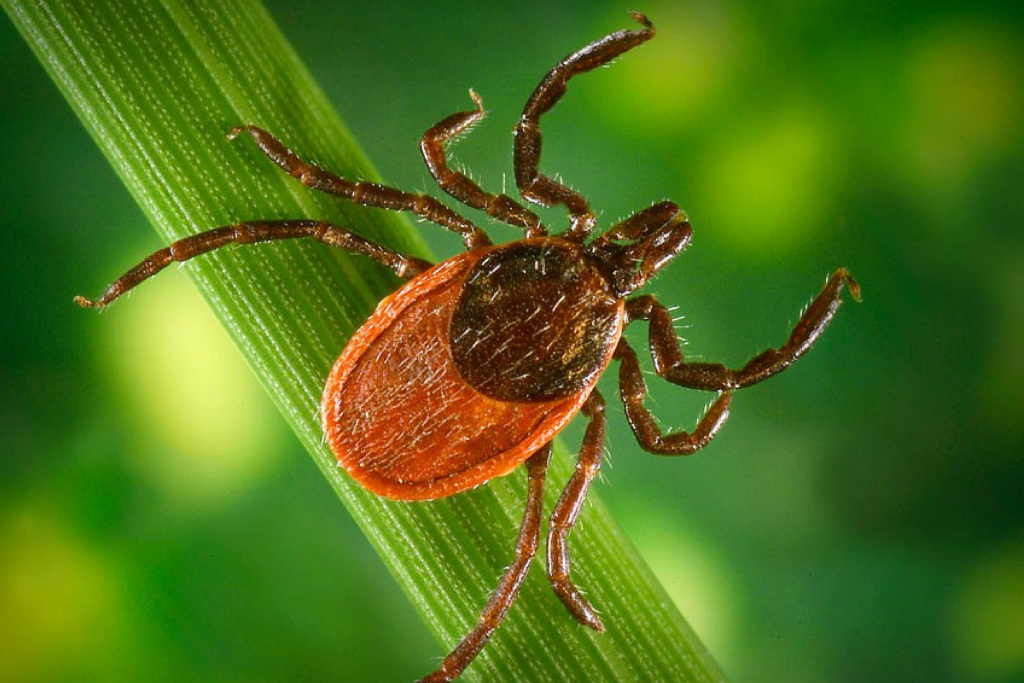
Lone star ticks, Amblyomma americanum, are one of the more easily recognized ticks since the female adult has an easily noticed white dot on the center of her back. Males of the species have white lines or streaks around the edges of the top of their body, but these markings are not as noticeable as the markings on the female. Often, lone star ticks are mistaken for blacklegged ticks, one of two tick vectors of Lyme disease. However, lone star ticks are not known to transmit Lyme disease.

American Dog Tick
The American dog tick or wood tick is a rather colorful tick and is commonly found in highly wooded, shrubby, and long grass areas. It is also one of the most well known ticks covering more than half of the United States. Thankfully it is not known to carry the Borrelia agent that causes Lyme disease.

How deer ticks become infected with Lyme disease?
Best way to remove a Tick!
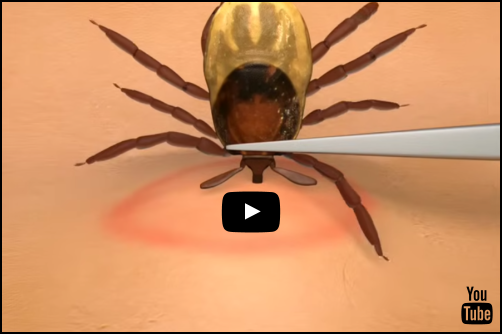
If you get bit, what's next?
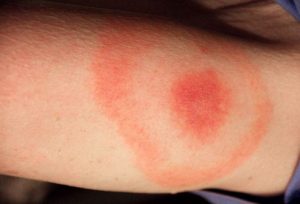 If this tick bite has transmitted Lyme disease, the redness may expand over the next few days or weeks and form a round or oval red rash. It may resemble the classic bull’s eye, with a red ring surrounding a clear area and a red center. This rash, called erythema migrans, is a hallmark of Lyme disease but it only appears in maybe 50% of infected people. Now the million dollar question is… What do you do next? Test the tick or Test yourself or both? That depends, if you have the bullseye or if you experience flu like symptoms, achey joints, and just not normal you should see a “Lyme Literate Dr” or a Dr who is very familiar with lyme so you can get started on antibiotics right away. Quick treatment is the most important thing before weeks and months pass by and the lyme has had a chance to really get in your system. If just bitten save the tick and you can have it tested (see below tick testing labs) to see if it has lyme or any other tick-borne diseases.
For over 25 years, IGeneX has been the global leader in the research and development of tests that accurately detect Lyme disease, Relapsing Fever, and other tick-borne diseases. Tick-borne illnesses can affect every part of your life, and without effective diagnosis and treatment, symptoms can often worsen and progress into severe and even life-threatening health issues. And when you can’t find the cause or a way to get better, your quality of life suffers. At IGeneX, we make it our singular mission to offer best-in-class testing for tick-borne diseases that delivers the most comprehensive and accurate results possible, so you can find the right treatment path to restore your health and get back to enjoying your life. Starting now.
Phone: 1-800-832-3200
Our Mission is to provide to a professional tick testing service to public individuals and agencies seeking more information about the risk of dangerous pathogens.
We’ve developed a battery of tests through years of research on disease-causing microbes in ticks. Since 2006, we’ve offered this expertise as service to the general public and health agency partners. Since that time, we’ve endeavored to keep costs of this testing to a minimum to allow us to serve the greatest number of subscribers. As the popularity of the service grew, the amount of data collected also grew and we now share that data as part of Tick-Borne Disease Network passive surveillance that we hope will continue to grow and provide unprecedented insights to who is being bitten by ticks, when they get bitten, and what pathogens those ticks are carrying. We welcome feedback on our web page (tickdiseases.org) and encourage everyone to SAVE THE TICKS!
Phone: 413-545-1057
TickReport.com
Lyme Prevention
 The best way to avoid Lyme Disease is to avoid ticks. The best way to avoid ticks starts with great prevention. The best prevention starts with the best repellent known as Permethrin. The best Permethrin is Duration. Why is Duration the best?
- Kills and Repels ticks, chiggers, mites and mosquitoes…
- Helps protect against Lyme and other tick borne diseases, also Yellow Fever Mosquito, which could transmit the Zika Virus etc.
- Duration 10% is the only Permethrin clothing grade concentrate registered by the EPA and is the most economical clothing repellant on the market.
- One 8 oz container of Duration 10% (as shone here can make one gallon 128 oz) can treat many sets of clothes depending on how long protection is needed. One set of clothes is 1 shirt, 1 pair of pants, and 1 pair of socks.
- Protection can last from 3-24 weeks or 3-24 washings; will not stain or damage clothing, fabrics, plastics, or outdoor gear.
- Odorless after drying; ideal for hunting.
- Duration is a must for anyone who goes outdoors !
 Tick-Killing Tip: Dry Then Wash, Brief Dryer Spin Could Do It.